
📖 Acts 19:21–41 (NKJV) 📚
21 When these things were accomplished, Paul purposed in the Spirit, when he had passed through Macedonia and Achaia, to go to Jerusalem, saying, “After I have been there, I must also see Rome.”
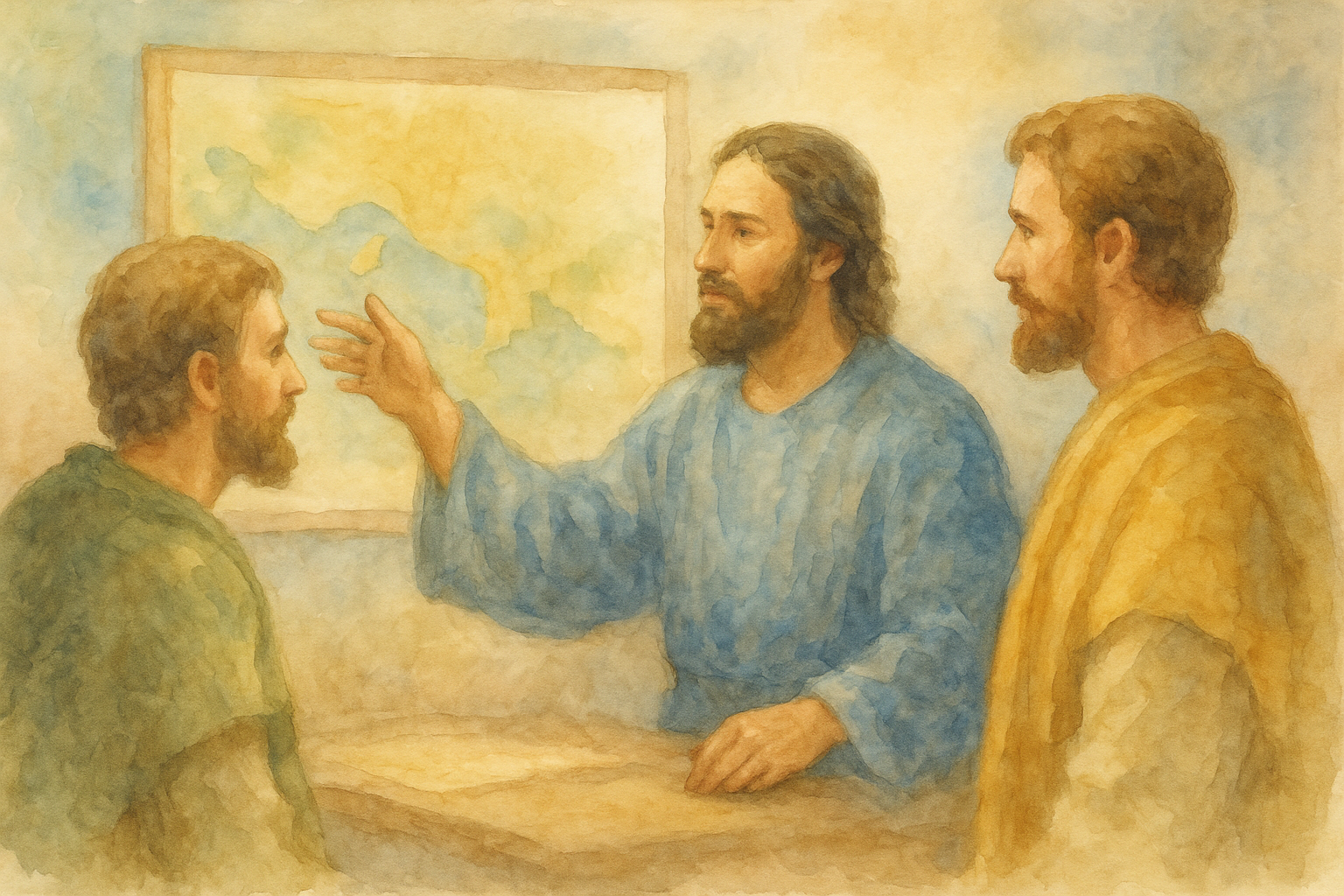
22 So he sent into Macedonia two of those who ministered to him, Timothy and Erastus, but he himself stayed in Asia for a time.
23 And about that time there arose a great commotion about the Way.
24 For a certain man named Demetrius, a silversmith, who made silver shrines of Diana, brought no small profit to the craftsmen.
25 He called them together with the workers of similar occupation, and said: “Men, you know that we have our prosperity by this trade.
26 Moreover you see and hear that not only at Ephesus, but throughout almost all Asia, this Paul has persuaded and turned away many people, saying that they are not gods which are made with hands.
27 So not only is this trade of ours in danger of falling into disrepute, but also the temple of the great goddess Diana may be despised and her magnificence destroyed, whom all Asia and the world worship.”
28 Now when they heard this, they were full of wrath and cried out, saying, “Great is Diana of the Ephesians!”
29 So the whole city was filled with confusion, and rushed into the theater with one accord, having seized Gaius and Aristarchus, Macedonians, Paul’s travel companions.
30 And when Paul wanted to go in to the people, the disciples would not allow him.
31 Then some of the officials of Asia, who were his friends, sent to him pleading that he would not venture into the theater.
32 Some therefore cried one thing and some another, for the assembly was confused, and most of them did not know why they had come together.
33 And they drew Alexander out of the multitude, the Jews putting him forward. And Alexander motioned with his hand, and wanted to make his defense to the people.
34 But when they found out that he was a Jew, all with one voice cried out for about two hours, “Great is Diana of the Ephesians!”
35 And when the city clerk had quieted the crowd, he said: “Men of Ephesus, what man is there who does not know that the city of the Ephesians is temple guardian of the great goddess Diana, and of the image which fell down from Zeus?
36 Therefore, since these things cannot be denied, you ought to be quiet and do nothing rashly.
37 For you have brought these men here who are neither robbers of temples nor blasphemers of your goddess.
38 Therefore, if Demetrius and his fellow craftsmen have a case against anyone, the courts are open and there are proconsuls. Let them bring charges against one another.
39 But if you have any other inquiry to make, it shall be determined in the lawful assembly.
40 For we are in danger of being called in question for today’s uproar, there being no reason which we may give to account for this disorderly gathering.”
41 And when he had said these things, he dismissed the assembly.

👣 Traces of Jesus’ Ministry 👣
✝️ Truth That Confronts Idolatry — Just as Jesus overturned the tables in the temple (Matthew 21:12–13), Paul’s preaching in Ephesus exposed the futility of man-made gods. The gospel always brings truth into conflict with false worship.
🔥 Peace Amid Uproar — When chaos surrounded Him, Jesus never shouted to be heard above the crowd. He stood calm in storms, teaching that true authority doesn’t need noise. Paul’s restraint here mirrors Christ’s own composure when the mob cried “Crucify Him.”
💬 Speaking Without Defending Self — Jesus remained silent before Pilate (Matthew 27:14). Likewise, Paul does not rush into the theater to defend himself. His friends’ protection reflects how Christ, too, entrusted His vindication to the Father.
🌍 God’s Kingdom Above Earthly Glory — The people of Ephesus shouted for Diana’s greatness, but Paul’s quiet faith showed who truly reigns. Jesus also faced crowds celebrating worldly power, yet His kingdom was “not of this world” (John 18:36).
🕊️ Peace After Turmoil — As the city clerk restores order, we are reminded of Jesus calming the sea (Mark 4:39). God still speaks peace into human uproar, proving His control even when the world seems loudest.

📜 From the Early Church 📜
🏛️ Ephesus and the Clash of Kingdoms — The riot in Ephesus marked a decisive moment in early Christian history: the gospel confronted one of the greatest centers of pagan worship in the ancient world. The magnificent temple of Artemis (Diana), one of the Seven Wonders, stood as a symbol of earthly splendor — yet even there, the Word of God prevailed.
💰 Faith Against the Economy of Idols — Early believers often faced opposition not merely from theology, but from economics. Like Demetrius, many feared loss of income more than loss of truth. The Church Fathers noted that conversion to Christ often challenged unjust systems of profit and exploitation.
🗣️ The Courage to Stay Silent — The early church saw wisdom in Paul’s restraint. As one ancient commentary observed: “He who preaches Christ does not need to contend for himself, for the truth will speak louder than the mob.”Their example encourages believers to trust God’s timing in conflict.
🔥 The Gospel’s Unstoppable Advance — Though mobs raged and rulers wavered, the church continued to grow. Just as persecution in Jerusalem scattered believers who carried the gospel farther (Acts 8:4), this riot could not silence the Word. Even in uproar, the mission endured.

⏳ Historical and Cultural Background ⌛️
🏛️ Ephesus — A bustling port city and the Roman capital of Asia Minor, Ephesus was known for its wealth, trade, and devotion to the goddess Artemis (Diana). Her massive marble temple stood on a platform larger than a football field and attracted worshipers from across the empire. It was both a spiritual and economic center.
💎 The Silversmiths’ Trade — Craftsmen like Demetrius produced miniature silver shrines of Artemis for pilgrims. These were sold as souvenirs or amulets believed to offer protection. The gospel’s spread threatened this lucrative business, as converts abandoned idol worship — causing real financial loss to the artisans.
🔥 The Theater of Ephesus — This grand open-air theater seated around 24,000 people and overlooked the city’s main road. It served as both entertainment venue and civic assembly space. The uproar described by Luke was not a few people shouting — it was a roaring mass filling one of the largest theaters of the ancient world.
⚖️ The City Clerk’s Role — The grammateus (city clerk) was the chief administrative officer of the city, responsible for keeping peace and reporting to Roman authorities. His calm intervention likely saved Paul’s companions and prevented Ephesus from facing severe imperial punishment for disorder.
🌙 The Goddess Diana (Artemis) — Worshiped as the protector of fertility, hunting, and childbirth, Diana’s Ephesian image was believed to have “fallen from Zeus” (v.35). Her cult was among the most powerful in the ancient world. The gospel’s arrival at Ephesus symbolized Christ’s triumph over deeply rooted pagan systems.
🕊️ Paul’s Purpose “in the Spirit” — Even amid turmoil, Paul’s heart was set on Jerusalem and Rome (v.21). His divine calling overshadowed temporary chaos. While Ephesus raged, heaven’s plan moved quietly forward.

🔍 Theological Themes
🔥 The Gospel Confronts Idolatry — Paul’s message in Ephesus exposes that idols, though beautifully made, have no life. Like the prophets of old, he declared that “they are not gods which are made with hands” (v.26). The gospel reveals the emptiness of human-made religion and turns hearts to the living God.
💰 Faith Over Profit — Demetrius’s anger shows how deeply greed can disguise itself as devotion. The Word of God doesn’t only challenge hearts — it shakes entire economies. True worship cannot be bought or sold; it is given freely through Christ.
🌪️ Peace in Chaos — While the city boiled with confusion, Paul’s restraint and the city clerk’s reason reveal that God’s hand still orders human affairs. Even when the crowd shouts louder than truth, heaven remains calm.
🕊️ God Protects His Servants — Though Paul was ready to face danger, God used others — disciples, friends, and civic officials — to shield him. Protection comes not only through miracles, but through ordinary people whom God places in the right moment.
⚖️ False Glory vs. True Greatness — The Ephesians shouted for hours, “Great is Diana of the Ephesians!” Yet their goddess could not speak or save. The real greatness belonged to the unseen King, whose gospel was quietly changing the world.
🌍 God’s Sovereignty Over Nations — From Jerusalem to Ephesus to Rome, Paul’s journey reflects Christ’s promise that His witnesses would reach “the ends of the earth” (Acts 1:8). Even riots and rulers are threads in the tapestry of God’s redemptive plan.
🗝️ Key Word Studies 🔑
“Purposed in the Spirit” (ἔθετο ἐν τῷ πνεύματι, etheto en tō pneumati) 🌿 — Strong’s G5087 & G4151
To set, to place, to determine in the Holy Spirit.
Paul’s journey was not mere travel; it was divine intention. His plans aligned with the Spirit’s direction, showing how spiritual conviction leads action.
“Commotion” (στάσις, stasis) 🔥 — Strong’s G4714
A standing, uprising, or riot.
Used in both civil and military contexts, stasis conveys rebellion and instability. Here, it describes the violent reaction to the gospel’s challenge against idolatry.
“Silversmith” (ἀργυροκόπος, argyrokopos) ⚒️ — Strong’s G693
A worker in silver.
This compound of argyros (silver) and kopos (labor) reveals Demetrius’s identity as both artisan and businessman. The conflict was not spiritual zeal but commercial loss disguised as piety.
“Great is Diana of the Ephesians” (Μεγάλη ἡ Ἄρτεμις Ἐφεσίων, Megale hē Artemis Ephesion) 💬 — Strong’s phrase reference
A civic chant of loyalty and worship.
Their cry echoed political, not purely religious, devotion. In shouting for Diana’s greatness, they were also defending their city’s pride and economy.
“Quiet” (καταστείλας, katasteilas) ☀️ — Strong’s G2687
To calm, to restrain, to settle.
Used of stilling waves or pacifying people, the city clerk “quieted” the mob. His reasoned speech becomes a vessel of divine peace, illustrating God’s control through unexpected voices.
“Dismissed” (ἀπέλυσεν, apelysen) 🕊️ — Strong’s G630
To release, to set free.
The same verb used for freeing prisoners. Symbolically, it marks the end of human uproar and the restoration of God’s order — the crowd’s rage dissolving into quiet dismissal.

🕎 Old Testament Connections 🏛️
🔥 False Gods That Cannot Speak or Save — Paul’s words that “they are not gods which are made with hands” (v.26) echo the prophets’ denunciations of idols. Isaiah declared, “They have mouths, but they do not speak” (Psalm 115:5; cf. Isaiah 44:9–20). The uproar in Ephesus fulfills ancient truth: idols incite noise but produce no life.
💰 Greed Masquerading as Worship — Like Balaam in Numbers 22, Demetrius cloaked his profit motives in piety. Both sought gain under the guise of religion, warning us that idolatry often begins in the heart before it appears in a temple.
🌊 God Silencing the Storm — The city clerk’s calming of the crowd parallels God stilling the seas (Psalm 107:29). Just as the Lord quieted nature’s storm, He also quieted human rage in Ephesus — a living picture of divine authority over both creation and chaos.
🏛️ The Futility of Man’s Glory — The chant “Great is Diana of the Ephesians” recalls Nebuchadnezzar’s pride in Daniel 4:30, when he boasted of his great Babylon. Both examples show how human glory fades before the eternal kingdom of God.
🌿 A Remnant Preserved — Though surrounded by danger, God preserved Paul and the believers, as He had preserved Elijah in the time of Ahab (1 Kings 19:18). Even when the crowd seemed unstoppable, God kept His servants hidden under His protection.
🕊️ Peace After Wrath — The riot ends with calm — a theme echoed in the Psalms: “He makes wars cease to the end of the earth” (Psalm 46:9). The Lord who stilled ancient nations continues to bring peace where human fury once reigned.
⁉️ Thoughtful Reflection Questions ⍰
🙏 1. When Paul’s message disrupted the economy of idols, he faced fury and rejection.
Are there areas in my life where following Christ might cost me comfort, approval, or income — and am I willing to stand firm anyway?
💬 2. The crowd shouted “Great is Diana!” for two hours, while truth stood silent.
How can I recognize the difference between noise that feels powerful and truth that is quietly eternal?
🕊️ 3. Paul’s friends restrained him from entering the theater, protecting him from harm.
How has God used wise counsel or loving friends to guard me when my zeal could have led me into danger?
🔥 4. Demetrius feared losing his profits more than losing his soul.
In what ways might I sometimes cling to things that offer temporary security but hinder deeper devotion to God?
🌅 5. The city clerk’s calm reason ended the uproar without violence.
What does this teach me about how God can use even unbelievers to restore peace and accomplish His purpose?
📚 References — Sources Used in This Post 📚
Free Online Sources:
- Blue Letter Bible — NKJV text, lexicon, and Strong’s Concordance. https://www.blueletterbible.org
- Bible Hub — Parallel translations and commentaries. https://biblehub.com
- NET Bible Notes — Textual and cultural notes. https://netbible.org
Historical/Print Sources:
- Archaeological and cultural background on Ephesus and the Temple of Artemis from early Greco-Roman history references.
- Notes on the Ephesian theater and civic governance drawn from classical city records and commentaries.
- BibleMapper Interactive Maps — Paul’s Third Missionary Journey (A.D. 53–57).
Image Credits (Wordless, Created for This Post):
- “Paul speaking calmly with Timothy and Erastus before their journey.” — Watercolor pastoral AI image created by ChatGPT for this study (Acts 19:21–41).
- “Demetrius the silversmith holding a small silver shrine of Diana, surrounded by anxious craftsmen.” — Watercolor pastoral AI image created by ChatGPT for this study (Acts 19:21–41).
- “A crowded marketplace erupting in chaos as people shout ‘Great is Diana of the Ephesians!’” — Watercolor pastoral AI image created by ChatGPT for this study (Acts 19:21–41).
- “Paul reaching toward the theater as his friends restrain him.” — Watercolor pastoral AI image created by ChatGPT for this study (Acts 19:21–41).
- “The city clerk quieting the mob, sunlight breaking through above the theater.” — Watercolor pastoral AI image created by ChatGPT for this study (Acts 19:21–41).
- “The empty theater at sunset, peace after the storm.” — Watercolor pastoral AI image created by ChatGPT for this study (Acts 19:21–41).
🤖✨ Artificial Intelligence Assistance
ChatGPT. “🌸 The Riot at Ephesus 🌻 — Acts 19:21–41.” OpenAI, 2025, https://chat.openai.com.
This post was prayerfully prepared in collaboration with ChatGPT 🤖, a research assistant designed to support deep, Christ-centered Bible study.
All Scripture is taken from the New King James Version (NKJV).
Supporting materials include Strong’s Concordance, historical commentaries, and cultural background sources.
🕊️ May this work bring glory to God and encouragement to all who read it. 💕
Leave a Reply