
📖 Scripture Reading (NKJV)

4 So, being sent out by the Holy Spirit, they went down to Seleucia, and from there they sailed to Cyprus.
5 And when they arrived in Salamis, they preached the word of God in the synagogues of the Jews. They also had John as their assistant.
6 Now when they had gone through the island to Paphos, they found a certain sorcerer, a false prophet, a Jew whose name was Bar-Jesus,
7 who was with the proconsul, Sergius Paulus, an intelligent man. This man called for Barnabas and Saul and sought to hear the word of God.
8 But Elymas the sorcerer (for so his name is translated) withstood them, seeking to turn the proconsul away from the faith.
9 Then Saul, who also is called Paul, filled with the Holy Spirit, looked intently at him
10 and said, “O full of all deceit and all fraud, you son of the devil, you enemy of all righteousness, will you not cease perverting the straight ways of the Lord?
11 And now, indeed, the hand of the Lord is upon you, and you shall be blind, not seeing the sun for a time.” And immediately a dark mist fell on him, and he went around seeking someone to lead him by the hand.
12 Then the proconsul believed, when he saw what had been done, being astonished at the teaching of the Lord.
👣 Traces of Jesus’ Ministry

- “Sent out by the Holy Spirit” 🕊️ Just as Jesus was “led by the Spirit” into the wilderness (Luke 4:1), Barnabas and Saul are sent out by the Spirit. Their mission follows the pattern of Christ’s Spirit-led ministry.
- Preaching first in the synagogues 📖🕍 Jesus began His ministry in the synagogue of Nazareth (Luke 4:16–21). In the same way, Barnabas and Saul begin in Jewish synagogues, showing continuity with Jesus’ mission to God’s covenant people.
- Elymas the sorcerer opposing the truth 🌑 Jesus faced constant opposition from religious leaders who twisted truth and tried to block faith (John 8:44). Paul’s words — “you son of the devil” — echo Jesus’ confrontation with those who opposed God’s ways.
- Blindness as judgment 👀❌ Jesus healed the blind to reveal Himself as Light of the world (John 9:5–7). Here, Elymas is struck blind — a sign of spiritual darkness and rebellion. It mirrors Saul’s own temporary blindness at conversion, but in Elymas’ case it exposes his resistance to God.
- “Straight ways of the Lord” ➡️✨ This phrase recalls John the Baptist’s cry: “Make His paths straight” (Luke 3:4). Elymas perverted the straight paths, but Jesus’ way is always righteous and true.
- Astonishment at the teaching of the Lord 😮📖 The proconsul’s amazement mirrors how crowds marveled at Jesus’ teaching (Matthew 7:28–29). The miracle confirmed the message, but it was the teaching itself that brought Sergius Paulus to faith.
📜 From the Early Church

- Spirit-led mission 🕊️ The church did not send Barnabas and Saul by their own wisdom; they were “sent out by the Holy Spirit.” This shows how early believers depended on the Spirit’s direction rather than human strategy.
- Pattern of synagogue-first evangelism 📖🕍 In every city, Paul began with the synagogue, honoring God’s covenant people first (Romans 1:16). This established a rhythm for missionary work — Jews first, then Gentiles.
- John Mark as assistant 🌿 The inclusion of John Mark (cousin of Barnabas) shows how younger believers were drawn into mission. The early church valued discipleship by including new workers in active ministry.
- Confronting false teaching ⚔️ Elymas opposed the gospel and tried to sway Sergius Paulus. The early church quickly learned that the gospel would face spiritual opposition, often clothed in religious or intellectual influence.
- Authority through the Spirit ✨ Paul’s rebuke of Elymas was not from personal anger, but from being “filled with the Holy Spirit.” The church understood that true authority came only through God’s Spirit, not human strength.
- Miracles confirming the Word 🌟 Just as signs accompanied the apostles earlier (Acts 5:12; 14:3), Elymas’ blindness confirmed the truth of Paul’s words. Yet the text highlights that Sergius Paulus believed because of the teaching of the Lord, not merely the miracle.
- The church’s witness reaches Rome’s elite 👑 Sergius Paulus was a Roman proconsul — a high official. His faith shows how the gospel was beginning to penetrate the highest levels of society.
🕰️ Historical and Cultural Background

- Seleucia & Cyprus 🌊
- Seleucia was the port of Antioch, about 16 miles away on the Mediterranean coast.
- Cyprus, Barnabas’ homeland (Acts 4:36), was a natural first mission field. It was a large island with a strong Jewish presence and thriving trade.
- Salamis (east coast) had several synagogues, reflecting its large Jewish population.
- Paphos (west coast) was the Roman capital of Cyprus, known for its temple of Aphrodite and reputation for immorality.
- Proconsul Sergius Paulus 👑
- A Roman governor of senatorial provinces like Cyprus was called a proconsul.
- Archaeological inscriptions confirm the existence of a Sergius Paulus who governed Cyprus in this era.
- Luke’s accurate use of the title “proconsul” matches Roman practice — a small but powerful historical confirmation of Acts’ reliability.
- Elymas / Bar-Jesus 🕷️
- “Bar-Jesus” means “son of Joshua/Jesus.” The name is ironic since he opposed the true Jesus.
- “Elymas” is likely derived from the Arabic ʿalim meaning “wise” or “sorcerer.”
- He is called a magos (magician), the same word used for the “wise men” in Matthew 2:1, but here describing occult or deceptive practices.
- Sorcery and false prophecy 🌑
- In the Roman world, magicians and astrologers often served political leaders, offering guidance through omens and spells.
- Jewish law strictly forbade sorcery and divination (Deuteronomy 18:10–12). Elymas, though a Jew, had abandoned the Law to serve in deception.
- Blindness as a cultural and spiritual symbol 👀❌
- Blindness was often viewed as both physical affliction and spiritual darkness.
- Paul himself experienced temporary blindness at his conversion (Acts 9:8–9). Elymas’ blindness shows God’s judgment and becomes a living parable of resisting truth.
- “Son of the devil” ⚔️
- This sharp rebuke echoes Jewish and Christian tradition of associating lies, deceit, and opposition with Satan (John 8:44; 1 John 3:8).
- The early church saw opposition to the gospel as spiritual warfare, not just human resistance.
🗝️ Key Word Studies
- “Sorcerer” (μάγος, magos — Strong’s G3097) 🕷️
- Meaning: Magician, wise man, one who claims supernatural knowledge.
- Positive sense in Matthew 2 (wise men from the East), but here in a negative sense: deceiver practicing occult.
- “False prophet” (ψευδοπροφήτης, pseudoprophētēs — Strong’s G5578) ⚠️
- Meaning: One who pretends to speak for God but misleads people.
- Used by Jesus in Matthew 7:15 — “Beware of false prophets.” Elymas is both magician and false prophet, doubly condemned.
- “Withstood” (ἀνθίστημι, anthistēmi — Strong’s G436) ✋
- Meaning: To resist, oppose, stand against.
- Same verb in James 4:7 — “Resist the devil and he will flee from you.” Elymas actively opposed the truth, setting himself against God.
- “Looked intently” (ἀτενίζω, atenizō — Strong’s G816) 👀
- Meaning: To gaze steadily, fix one’s eyes.
- Often used in Acts for Spirit-filled moments (e.g., Peter in Acts 3:4; Stephen in Acts 6:15). Paul’s steady gaze shows Spirit-filled authority.
- “Full of all deceit” (δόλος, dolos — Strong’s G1388) 🕸️
- Meaning: Craft, trickery, bait.
- Same word used of Satan’s cunning in 2 Corinthians 11:3. Elymas spun lies to trap others.
- “Hand of the Lord” (χείρ, cheir — Strong’s G5495) ✋✨
- Meaning: Hand, power, authority.
- Common OT/NT phrase for God’s power in judgment or salvation (Exodus 9:3; Acts 11:21). Here it falls in judgment on Elymas.
- “Mist” (ἀχλύς, achlys — Strong’s G887) 🌫️
- Meaning: Thick mist, dimness of sight.
- Only here in NT. Describes Elymas’ blindness as sudden darkness covering him.
- “Astonished” (ἐκπλήσσω, ekplēssō — Strong’s G1605) 😲
- Meaning: To be amazed, struck with wonder.
- The proconsul’s faith came not from the miracle alone but from astonishment at “the teaching of the Lord.”
🔍 Theological Themes

- The Spirit sends, not man 🕊️ Barnabas and Saul were “sent out by the Holy Spirit.” Mission is God’s initiative — His Spirit empowers, directs, and sustains the work.
- The gospel confronts falsehood ⚔️ Elymas stood in direct opposition to God’s Word. The gospel is not just proclaimed — it also exposes lies, rebukes deception, and confronts spiritual darkness.
- Light vs. darkness 🌟🌑 Sergius Paulus was drawn to the light of God’s Word, while Elymas was plunged into physical and spiritual darkness. The theme of light overcoming darkness runs throughout Scripture.
- Blindness as judgment 👀❌ Elymas’ blindness symbolizes his inner condition. Spiritual rebellion leads to blindness of heart, just as rejecting Christ hardens the eyes of faith.
- Authority through the Spirit ✨ Paul’s rebuke of Elymas came after being “filled with the Holy Spirit.” True authority in ministry flows not from personality or power, but from the Spirit’s presence.
- Miracle confirming the message 🌱 The miracle of blindness confirmed God’s Word, but Luke emphasizes that Sergius Paulus believed because of “the teaching of the Lord.” Faith comes by hearing the Word, not merely seeing wonders (Romans 10:17).
- The gospel reaches Roman authority 👑 With Sergius Paulus’ conversion, the gospel penetrated even Roman leadership. This foreshadows its advance to the very heart of the empire — Rome itself.
- Saul becomes Paul 📖 This passage marks the turning point where Luke begins using Paul’s Roman name, fitting his mission to the Gentiles. God equips His servants to reach every culture.
🕎📜 Old Testament Connections

- Sorcery and divination forbidden 🕷️
- Deuteronomy 18:10–12 — God condemned sorcery, divination, and witchcraft as abominations.
- Elymas, though Jewish, lived in outright violation of God’s Law, showing rebellion against God’s covenant.
- False prophets opposed God’s truth ⚠️
- Jeremiah 23:16 — “Do not listen to the words of the prophets who prophesy to you… they speak a vision of their own heart.”
- Ezekiel 13:9 — God declares judgment on false prophets. Elymas stands in their same line of deception.
- Blindness as judgment 👀❌
- Deuteronomy 28:28–29 — one curse of disobedience was “madness and blindness and confusion of heart.”
- Isaiah 29:10 — “For the LORD has poured out on you the spirit of deep sleep, and has closed your eyes.”
- Elymas’ blindness reflects God’s judgment on those who pervert His ways.
- God’s hand of power ✋✨
- Exodus 9:3 — “the hand of the LORD will be on your livestock…”
- Psalm 118:15–16 — “The right hand of the LORD does valiantly.”
- In Acts 13:11, the “hand of the Lord” falls on Elymas in judgment, just as God’s hand both saves and strikes in the OT.
- Light vs. darkness 🌟🌑
- Isaiah 9:2 — “The people who walked in darkness have seen a great light.”
- The proconsul moved from Elymas’ dark deception to the light of the gospel, fulfilling Isaiah’s vision.
- The straight paths of the Lord ➡️
- Proverbs 3:6 — “In all your ways acknowledge Him, and He shall direct your paths.”
- Isaiah 40:3 — “Prepare the way of the LORD; make straight in the desert a highway for our God.”
- Paul rebukes Elymas for perverting the straight ways of the Lord, language deeply rooted in Israel’s hope of God’s clear, righteous path.
📖 New Testament Connections
- Opposition to the gospel ⚔️
- 2 Timothy 3:8 — “As Jannes and Jambres resisted Moses, so do these also resist the truth.”
- Just as Elymas opposed Paul, others would resist the gospel — yet God’s Word prevails.
- Blindness as spiritual condition 👀❌
- John 9:39 — Jesus said, “For judgment I have come into this world, that those who do not see may see, and that those who see may be made blind.”
- 2 Corinthians 4:4 — “The god of this age has blinded the minds of unbelievers.”
- Elymas’ blindness is both literal and symbolic of this reality.
- Authority in the Spirit ✨
- Luke 21:15 — Jesus promised His followers wisdom their opponents could not resist.
- Paul’s Spirit-filled rebuke of Elymas fulfills this promise.
- Astonishment at teaching 😮📖
- Matthew 7:28–29 — crowds were astonished at Jesus’ teaching, because He spoke with authority.
- Similarly, Sergius Paulus believed not just because of the miracle but because of the teaching of the Lord.
- Saul also called Paul 📖
- Acts 13:9 is the turning point where Luke shifts names.
- Paul later embraces this identity in his letters, connecting to his mission among the Gentiles (Romans 1:1; Galatians 1:15–16).
- Faith comes through hearing 👂
- Romans 10:17 — “Faith comes by hearing, and hearing by the word of God.”
- Sergius Paulus’ faith was rooted in hearing God’s Word, though it was confirmed by seeing the miracle.
- The gospel’s reach to Roman authority 👑
- Philippians 1:13 — Paul later testified that the gospel reached “the whole palace guard.”
- Sergius Paulus’ conversion foreshadows how God’s Word would spread even into Rome’s highest circles.
✨ Thoughtful Reflection Questions
- Barnabas and Saul were “sent out by the Holy Spirit.” 🕊️
- Do I wait for God’s leading in my decisions, or do I rush ahead with my own plans?
- Elymas actively opposed the gospel. ⚔️
- Where in my life do I see subtle “oppositions” to truth — voices, influences, or habits that try to pull me away from God’s Word?
- Paul confronted Elymas with Spirit-filled authority. ✨
- How can I grow in courage to stand for truth, not in my own strength, but by relying on the Spirit?
- Sergius Paulus believed, astonished at the Lord’s teaching. 📖🌟
- Am I still astonished and deeply moved by the teaching of God’s Word, or have I grown too familiar with it?
- Light triumphed over darkness in Cyprus. 🌑➡️🌟
- Where do I need to let God’s light shine into areas of darkness in my life today?
📚 References & Image Credits — Acts 13:4–12
Free Online Sources:
- Blue Letter Bible — NKJV text, Strong’s Concordance, and lexicon tools (Acts 13:4–12).
- Bible Hub — Parallel translations and commentaries on Acts 13:4–12.
- NET Bible Notes — Textual and cultural study notes.
Historical/Background Sources:
- Archaeological confirmation of Sergius Paulus as proconsul of Cyprus noted in inscriptions and supported by Acts’ accurate use of Roman titles.
- Cultural background on sorcery and false prophets in Greco-Roman society and Jewish law (Deuteronomy 18:10–12).
Map/Background References:
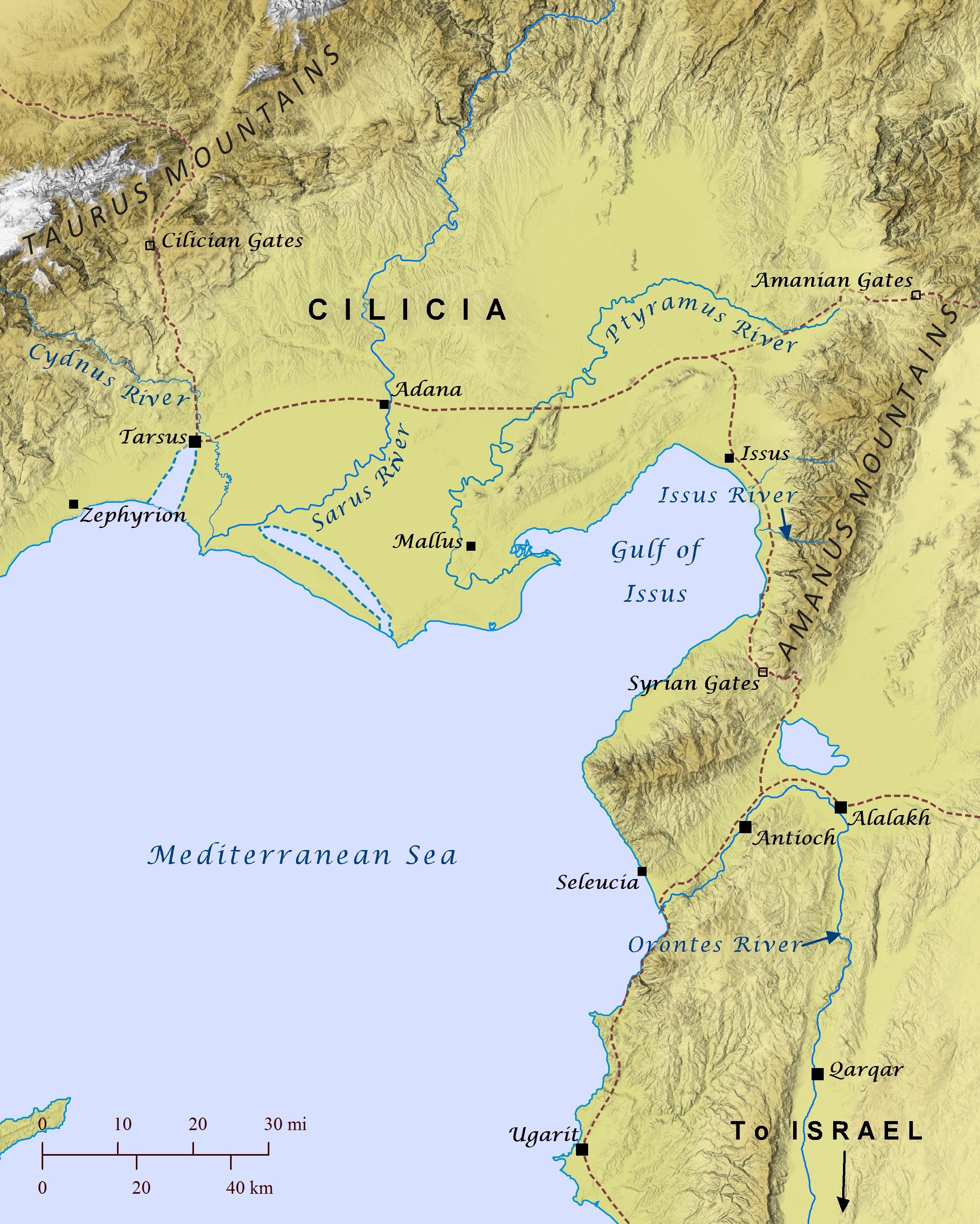
- The Cilician Plain and Tarsus — BibleMapper Blog.
- Map of Cyprus — BibleMapper Blog Image.

Image Credits (Wordless, Created for This Post):
- “Barnabas and Saul aboard a small wooden ship sailing from Seleucia to Cyprus, coastline fading in the distance” — Original AI image created by ChatGPT for Acts 13:4–12.
- “Barnabas and Saul preaching in a first-century synagogue, scrolls open, listeners seated in stone benches” — Original AI image created by ChatGPT for Acts 13:4–12.
- “Elymas the sorcerer standing defiantly between Paul and Sergius Paulus, shadows surrounding him” — Original AI image created by ChatGPT for Acts 13:4–12.
- “Paul filled with the Spirit rebuking Elymas, who clutches his eyes in sudden blindness” — Original AI image created by ChatGPT for Acts 13:4–12.
- “Sergius Paulus illuminated in astonishment as Elymas stumbles in darkness nearby” — Original AI image created by ChatGPT for Acts 13:4–12.
🤖✨ Artificial Intelligence Assistance
ChatGPT. “✨ Acts 13:4–12 — Ministry in Cyprus: Confronting Elymas the Sorcerer ✨.” OpenAI, 2025, https://chat.openai.com.
This post was prayerfully prepared in collaboration with ChatGPT 🤖, a research assistant designed to support deep, Christ-centered Bible study. All Scripture is taken from the New King James Version (NKJV), and supporting references include Strong’s Concordance, cultural background texts, historical resources, and trusted Bible study materials. May this work bring glory to God and encouragement to the hearts of those who read it. 🕊️💕.
Leave a Reply