
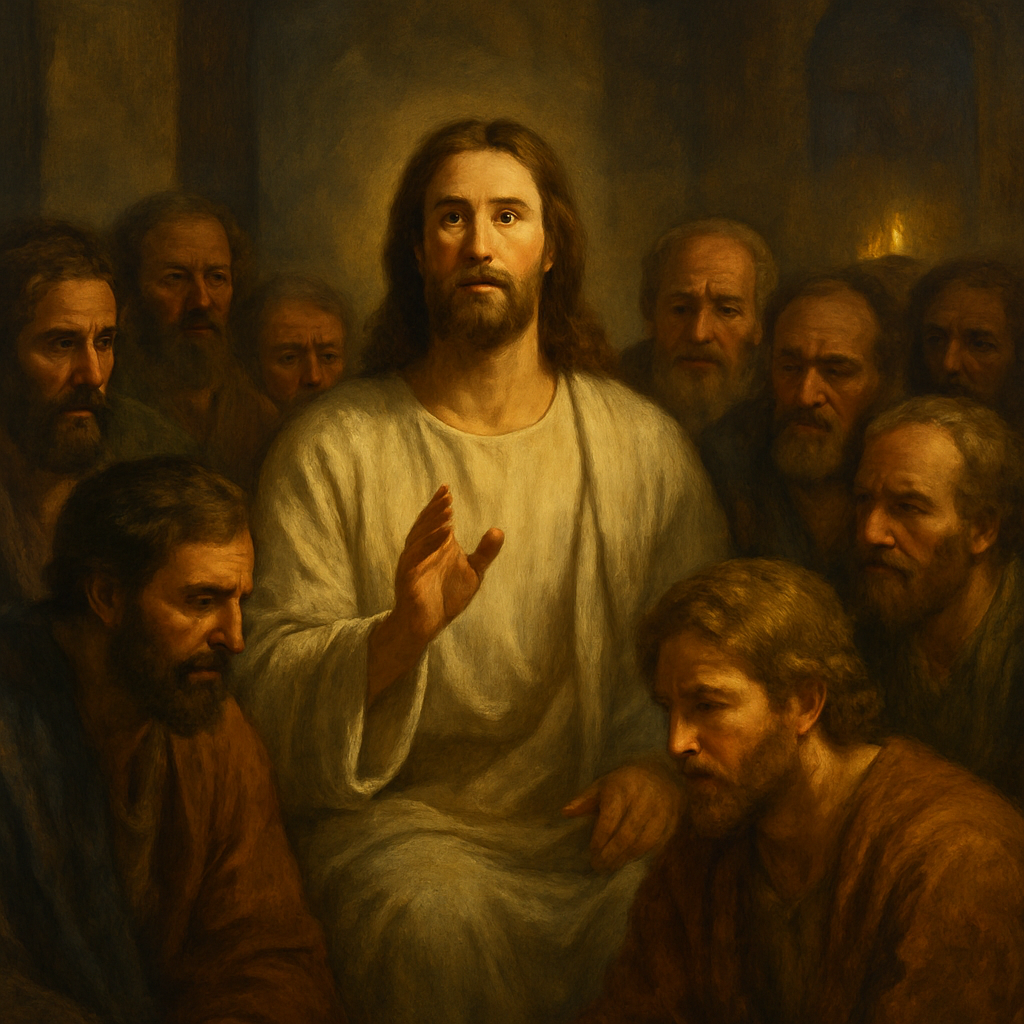
📖 Scripture Reading (NKJV)
John 14:1–14
1 “Let not your heart be troubled; you believe in God, believe also in Me.
2 In My Father’s house are many mansions; if it were not so, I would have told you. I go to prepare a place for you.
3 And if I go and prepare a place for you, I will come again and receive you to Myself; that where I am, there you may be also.
4 And where I go you know, and the way you know.”
5 Thomas said to Him, “Lord, we do not know where You are going, and how can we know the way?”
6 Jesus said to him, “I am the way, the truth, and the life. No one comes to the Father except through Me.
7 If you had known Me, you would have known My Father also; and from now on you know Him and have seen Him.”
8 Philip said to Him, “Lord, show us the Father, and it is sufficient for us.”
9 Jesus said to him, “Have I been with you so long, and yet you have not known Me, Philip? He who has seen Me has seen the Father; so how can you say, ‘Show us the Father’?
10 Do you not believe that I am in the Father, and the Father in Me? The words that I speak to you I do not speak on My own authority; but the Father who dwells in Me does the works.
11 Believe Me that I am in the Father and the Father in Me, or else believe Me for the sake of the works themselves.
12 “Most assuredly, I say to you, he who believes in Me, the works that I do he will do also; and greater works than these he will do, because I go to My Father.
13 And whatever you ask in My name, that I will do, that the Father may be glorified in the Son.
14 If you ask anything in My name, I will do it.”
🧭 Harmony with the Gospels
This beautiful and comforting passage from John has no direct parallel in the Synoptic Gospels (Matthew, Mark, or Luke), but the themes it presents are echoed in several places throughout Scripture. Let’s look at the harmony of themes rather than identical events.
💬 Comfort Before Suffering
- John 14:1 — “Let not your heart be troubled…”
- Luke 22:28–30 — Jesus tells the disciples they have stayed with Him in His trials and promises them a kingdom.
In both cases, Jesus offers words of hope and reassurance even though His arrest and death are imminent.
🏡 Promise of a Future Home
- John 14:2–3 — “I go to prepare a place for you… I will come again.”
- This concept is uniquely Johannine in its language, but the promise of gathering with Jesus in glory is echoed elsewhere:
- Matthew 25:34 — “Inherit the kingdom prepared for you.”
- Luke 12:32 — “It is your Father’s good pleasure to give you the kingdom.”
🛤️ Jesus as the Way
- John 14:6 — “I am the way, the truth, and the life…”
- A bold claim found only in John, but similar ideas appear in:
- Matthew 7:13–14 — “Narrow is the gate and difficult is the way which leads to life…”
- Acts 4:12 — “There is no other name under heaven… by which we must be saved.”
This exclusive claim ties back to the central Gospel truth: Jesus is the only path to the Father.
✨ The Glory of the Father Revealed in the Son
- John 14:9–11 — “He who has seen Me has seen the Father…”
- Compare:
- Matthew 11:27 — “No one knows the Father except the Son, and the one to whom the Son wills to reveal Him.”
- Colossians 1:15 — “He is the image of the invisible God…”
📖 While this teaching is unique to John in form, it is in perfect harmony with the rest of the Gospel message: Jesus came to bring us to the Father, and He is the living, visible expression of the unseen God.
🕰️ Historical and Cultural Background
John 14:1–14 — Let Not Your Heart Be Troubled
🕯️ Setting: The Upper Room on the Eve of the Crucifixion
This passage is part of what scholars call the Farewell Discourse (John 13–17). It was spoken just after Judas had left to betray Jesus. Tensions were rising, fear was creeping in, and Jesus knew that His arrest was only hours away.
The disciples were deeply confused and distressed:
- Jesus had just said He was going away.
- He had spoken of betrayal (John 13:21) and predicted Peter’s denial (John 13:38).
- Their understanding of the Messiah was still shaped by hopes of earthly glory.
So Jesus speaks comfort, not strategy.
He speaks eternity, not escape.
He speaks relationship with the Father, not revolution.
🏛️ “My Father’s House” and Ancient Jewish Betrothal Imagery
When Jesus says, “In My Father’s house are many mansions…” (v. 2), He draws on imagery the disciples would have known well — especially from the Jewish wedding tradition.
- In Jewish betrothal customs, after the groom pledged himself to the bride, he would return to his father’s houseto prepare a place for them.
- Only when the father said it was ready would he return for his bride.
- This language would have deeply reassured the disciples: Jesus was not abandoning them — He was making room for them.
🌿 It’s covenant language. It’s love. It’s home.
🕊️ “I Am the Way, the Truth, and the Life” in Roman Culture
In Roman and Greek philosophical circles, many claimed to offer “the way” to wisdom, enlightenment, or virtue. Even in Jewish writings of the time, “the way” could mean the path of righteousness (see Psalm 1:6).
When Jesus says “I AM the way” — He is claiming exclusivity, divine authority, and fulfillment of all that came before.
No other road leads to the Father but Him.
👁️ “Show us the Father” — Echoes of Exodus
Philip’s request in v. 8 reflects an age-old desire. It echoes Moses’ plea in Exodus 33:18:
“Please, show me Your glory.”
Just as God told Moses “You cannot see My face and live”, Jesus now says something astonishing:
“He who has seen Me has seen the Father.” (v. 9)
This is a radical revelation for any Jewish listener:
Jesus is saying, “I AM the visible presence of the invisible God.”
🗝️ Key Word Studies
John 14:1–14 — Let Not Your Heart Be Troubled
1. “Troubled” — ταράσσω (tarassō) — John 14:1
“Let not your heart be troubled…”
- This word means to stir up, agitate, or disturb — like water in a storm.
- It conveys emotional distress, confusion, or inner turmoil.
- Jesus uses the same word about Himself in John 12:27 — “Now My soul is troubled…”So He isn’t saying, “Don’t feel upset.” He’s saying, “Trust Me when you do.”
💗 Jesus is giving permission to feel, but calling them to anchor their hearts in faith.
2. “Mansions” — μονή (monē) — John 14:2
“In My Father’s house are many mansions…”
- This doesn’t mean literal mansions in the modern sense.The Greek word monē means dwelling places, abiding rooms, or permanent homes.
- It suggests belonging, safety, and intimate nearness to God.
🏡 Jesus promises not a palace—but a place with Him.
3. “Way, Truth, Life” — ὁδός, ἀλήθεια, ζωή (hodos, alētheia, zōē) — John 14:6
“I am the way, the truth, and the life…”
- Way (ὁδός): A road or path. He is the route to the Father, not just a guide.
- Truth (ἀλήθεια): That which is real, unchanging, and faithful.
- Life (ζωή): Not just biological life (bios), but spiritual, eternal life — the full vitality of God’s presence.
🌿 He doesn’t just give these things — He is them.
4. “Ask… in My name” — αἰτέω (aiteō) — John 14:13–14
“Whatever you ask in My name…”
- Aiteō implies a humble request, not a demand.
- To ask “in My name” means to ask with Jesus’ authority, aligned with His character and for the Father’s glory.
🙏 This is not a blank check — it’s a relational invitation to pray as one who bears His name.
🔍 Theological Themes
John 14:1–14 — Let Not Your Heart Be Troubled
1. Faith in the Face of Fear
“Let not your heart be troubled…” (v. 1)
Jesus acknowledges the fear and sorrow in His disciples — but calls them to trust.
Not just belief in God the Father, but equal belief in Him, the Son.
🕊️ This is the beginning of true peace: not the absence of trouble, but the presence of trust.
2. Jesus Is the Way to the Father
“I am the way, the truth, and the life…” (v. 6)
This is one of the clearest theological declarations in all of Scripture:
- Way — There is no other path to God.
- Truth — Jesus reveals reality perfectly.
- Life — Eternal life is found in Him alone.
🚪 This isn’t narrow-minded; it’s Jesus being lovingly clear: salvation is through Him alone.
3. Union of the Son with the Father
“He who has seen Me has seen the Father…” (v. 9)
Jesus is not simply a messenger — He is God in the flesh, fully revealing the Father’s nature.
- To know Jesus is to know God.
- His works and words are the Father’s works and words.
🌟 This is a core Christian belief: Jesus is not a prophet pointing to God. He is God, drawing us near.
4. The Promise of Eternal Belonging
“I go to prepare a place for you…” (v. 2)
Heaven is not an abstract reward — it’s a prepared home, an invitation to intimacy with God.
🏡 The goal is not just eternal life, but eternal life with Him.
5. The Power of Prayer in Christ’s Name
“Whatever you ask in My name… I will do it.” (vv. 13–14)
Jesus promises to hear and act when we pray in alignment with His will and character.
This empowers His disciples — and us — to continue His work on earth.
✨ Our prayers can bring God glory — when prayed in Christ’s name, for Christ’s glory.
🔗 Old Testament Connections
🛡️ 1. Trust in God — A Longtime Call
“You believe in God, believe also in Me.” (v. 1)
The call to trust in God is central to Israel’s identity.
- Proverbs 3:5–6 — “Trust in the Lord with all your heart…”
- Isaiah 26:3 — “You will keep him in perfect peace, whose mind is stayed on You…”
🌿 Jesus picks up this familiar theme, but applies it also to Himself — placing faith in Him on equal footing with faith in the Father. That would have been a radical, unmistakable claim of divinity.
🏠 2. “My Father’s House” — Temple and Presence
“In My Father’s house are many mansions…” (v. 2)
The phrase “My Father’s house” echoes the Temple, where God dwelled among His people (see 2 Chronicles 7:16).
But Jesus shifts the idea — the true dwelling of God will not be confined to stone and ritual. He’s preparing a heavenly home, where intimate relationship replaces distance and fear.
- Psalm 23:6 — “I will dwell in the house of the Lord forever.”
- Psalm 27:4 — “That I may dwell in the house of the Lord all the days of my life…”
💗 The longing for dwelling with God finds its fulfillment in Jesus’ promise.
🔥 3. “Show Us the Father” — Echoes of Moses
“Show us the Father…” (v. 8)
Philip’s request echoes Moses’ plea in Exodus 33:18:
“Please, show me Your glory.”
God told Moses no one could see Him and live. But now Jesus says:
“He who has seen Me has seen the Father.” (v. 9)
🌟 The glory Moses could only glimpse — Jesus reveals fully in Himself.
🛤️ 4. “The Way” — Path of Righteousness
“I am the way…” (v. 6)
- Psalm 16:11 — “You will show me the path of life…”
- Isaiah 35:8 — “A highway shall be there… the Way of Holiness…”
Jesus claims to be that promised way — not a traveler on the path, but the path itself.
🌍 5. God Working Through His Servant
“The Father who dwells in Me does the works.” (v. 10)
This reflects Isaiah’s Servant Songs, especially:
- Isaiah 61:1 — “The Spirit of the Lord is upon Me…” (quoted by Jesus in Luke 4)
- Isaiah 42:6–7 — God sends His Servant to be a light and healer.
Jesus, as the perfect Servant, does the Father’s works — revealing God’s heart through every miracle and word.
✨ Thoughtful Reflection Questions
- “Let not your heart be troubled…” (v. 1)
- ➤ What is troubling my heart today?
- ➤ Am I trying to carry my fears alone, or am I truly trusting Jesus with them?
- “In My Father’s house are many mansions…” (v. 2)
- ➤ How often do I think about the home Jesus is preparing for me?
- ➤ Does the hope of being with Him someday bring peace to my “right now”?
- “I am the way, the truth, and the life.” (v. 6)
- ➤ Do I truly believe that Jesus is the only way to the Father?
- ➤ Are there other “paths” I sometimes turn to for security or truth instead of Him?
- “He who has seen Me has seen the Father.” (v. 9)
- ➤ What does this reveal to me about the character of God?
- ➤ How does Jesus help me better understand the Father’s heart?
- “Whatever you ask in My name, I will do it…” (v. 14)
- ➤ What have I been hesitant to bring to Jesus in prayer?
- ➤ Do I trust that when I ask in His name — for His purposes — He hears and responds?
- General Reflection
- ➤ What verse or phrase stood out the most to me today, and why?
- ➤ Is there something God is gently asking me to believe, surrender, or hope for?
✅ References
📚 Free Online Sources
- The Holy Bible (New King James Version). Thomas Nelson, 1982.NKJV Online (Bible Gateway)
- Blue Letter Bible. Greek lexicon, interlinear text, and cross-references for John 14.https://www.blueletterbible.org/nkjv/jhn/14/1
- Bible Hub. Commentaries and Greek tools for John 14:1–14.https://biblehub.com/commentaries/john/14-1.htm
- StepBible.org. Word studies for tarassō, monē, hodos, alētheia, and zōē.https://www.stepbible.org
📚 Paid Print or Digital Books Used in This Post
- Carson, D. A. The Gospel According to John. Grand Rapids, MI: Eerdmans, 1991.Available at: Eerdmans
- Tenney, Merrill C. John: The Gospel of Belief. Grand Rapids, MI: Eerdmans, 1997.Purchase link: Christianbook
🤖✨ Artificial Intelligence Assistance
ChatGPT. “✨Let Not Your Heart Be Troubled✨ — John 14:1–14.” OpenAI, 2025, https://chat.openai.com.
This post was prayerfully prepared in collaboration with ChatGPT 🤖, a research assistant designed to support deep, Christ-centered Bible study. All Scripture is taken from the New King James Version (NKJV), and supporting references include Strong’s Concordance, cultural background texts, and trusted Gospel study materials. May this work bring glory to God and encouragement to the hearts of those who read it. 🕊️💕
🌷 Gentle Encouragement
If your heart feels heavy today, know this:
Jesus sees it.
He felt it.
And He spoke directly to it when He said, “Let not your heart be troubled.”
He is not far off. He is preparing a place.
He is the way when the path feels lost.
He is the truth when your thoughts are scattered.
He is the life when your soul feels tired.
So take a breath.
Lift your eyes.
Let your troubled heart be quieted in His presence.
You are loved, you are led, and you are never alone. 🕊️
Leave a Reply