
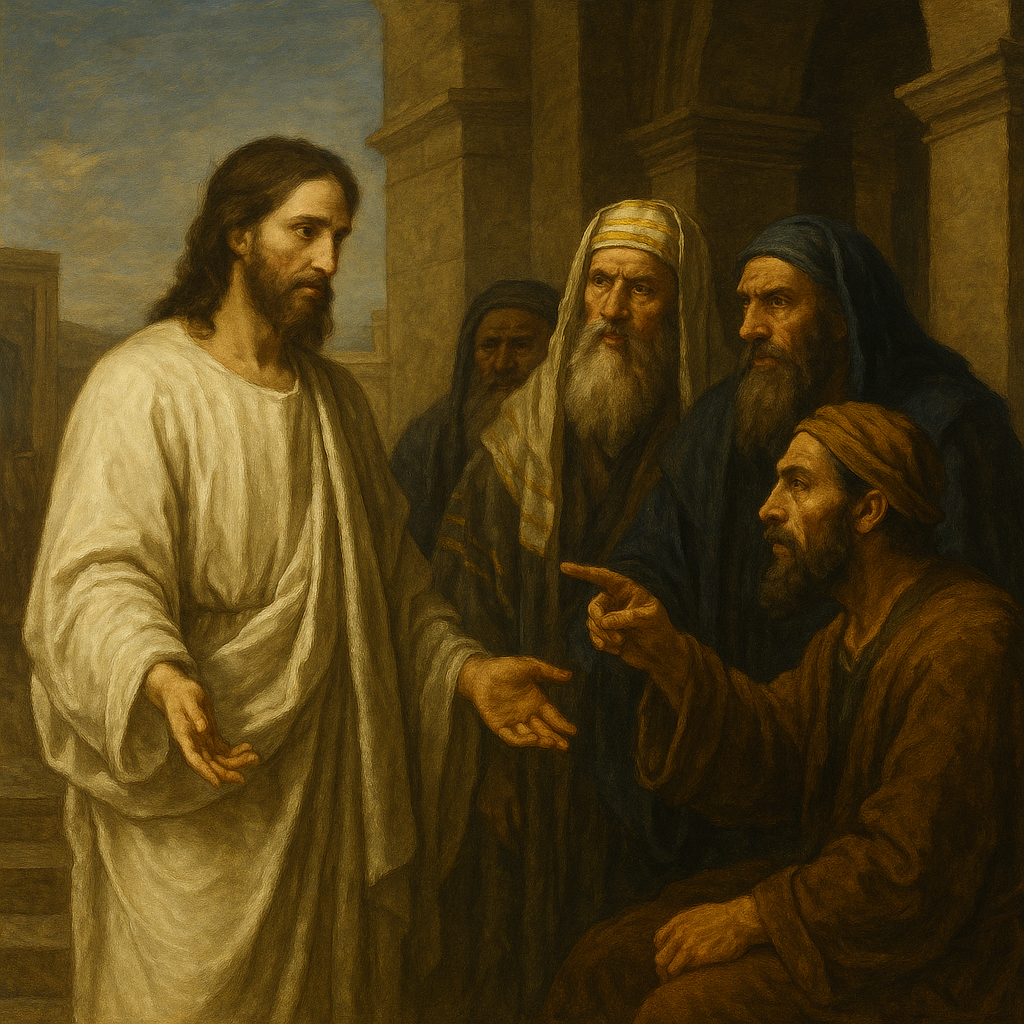
John 5:16–23 — “Equal with God”
This passage begins the response to the healing at the pool — and introduces some of the most profound truths about who Jesus truly is.
📖 Scripture Reading (NKJV)
16 For this reason the Jews persecuted Jesus, and sought to kill Him, because He had done these things on the Sabbath.
17 But Jesus answered them, “My Father has been working until now, and I have been working.”
18 Therefore the Jews sought all the more to kill Him, because He not only broke the Sabbath, but also said that God was His Father, making Himself equal with God.
19 Then Jesus answered and said to them, “Most assuredly, I say to you, the Son can do nothing of Himself, but what He sees the Father do; for whatever He does, the Son also does in like manner.
20 For the Father loves the Son, and shows Him all things that He Himself does; and He will show Him greater works than these, that you may marvel.
21 For as the Father raises the dead and gives life to them, even so the Son gives life to whom He will.
22 For the Father judges no one, but as he committed all judgment to the Son,
23 that all should honor the Son just as they honor the Father. He who does not honor the Son does not honor the Father who sent Him.
This is one of the clearest declarations of Jesus’ divine authority — not only over healing, but over life, judgment, and worship.
Day 19 – The Study of Jesus, with Bonnie Moore by BibleNerdWife✅ References
📖 Scripture Reading (NKJV)
The Holy Bible, New King James Version. Thomas Nelson, 1982.
📋 Gospel Parallel Table
- Matthew 12:1–14; Mark 2:23–3:6; Luke 6:1–11 — Jesus’ Sabbath healings and growing opposition
- John 5:16–23 — Unique to John, but thematically consistent with the Synoptic accounts of controversy surrounding Jesus’ divine claims
🧭 Harmony with the Gospels
- Matthew 11:27; Luke 10:22 — Jesus’ exclusive relationship with the Father
- Matthew 25:31–46 — The Son of Man judges the nations
- John 10:30; John 11:25 — Claims of divine unity and life-giving authority
- Philippians 2:9–11 — Christ exalted and honored above all
🕰️ Historical and Cultural Background
- Exodus 31:13–17 — Sabbath as a covenant sign
- Leviticus 24:16 — Blasphemy punishable by death
- Mishnah Shabbat 7:2 — The 39 prohibited labors on the Sabbath
- Freeman, James M. The New Manners and Customs of the Bible. Bridge-Logos Publishers, 1998.
🗝️ Key Word Studies
- Strong, James. Strong’s Exhaustive Concordance of the Bible. Hendrickson Publishers, 2009.
- G1377 — diōkō (persecute)
- G2038 — ergazomai (to work)
- G2470 — isos (equal)
- G1410 — dynamai (to be able)
- G5091 — timaō (to honor)
🔍 Theological Themes
- Walvoord, John F., and Roy B. Zuck, editors. The Bible Knowledge Commentary: New Testament. Victor Books, 1983.
- Tenney, Merrill C. The Gospel of John: The Cornerstone Biblical Commentary. Tyndale House, 2008.
🔗 Old Testament Connections
- Deuteronomy 32:39; 1 Samuel 2:6 — God alone gives life
- Psalm 75:7; Isaiah 33:22 — God as Judge
- Isaiah 42:8; 48:11 — God shares His glory with no one
- Hosea 6:6 — God desires mercy, not sacrifice
Artificial Intelligence Assistence
ChatGPT. “Day 16 — The Study of Jesus, with Bonnie Moore: John 4:27–42 – ‘The Woman Leaves Her Waterpot.’” OpenAI, 2025, https://chat.openai.com.
This post was prayerfully prepared in collaboration with ChatGPT, a research assistant designed to support deep, Christ-centered Bible study. All Scripture is taken from the New King James Version (NKJV), and supporting references include Strong’s Concordance, cultural background texts, and trusted harmony of the Gospels materials. May this work bring glory to God and encouragement to the hearts of those who read it. 🕊️
Leave a Reply